
Staying Safe on the Awa
Whether you’re in a motorboat, paddling a waka or kayak, or out on a jet ski, everyone shares responsibility for keeping the river safe. Please follow the guidelines below when enjoying the Awa.
Operate at a safe speed
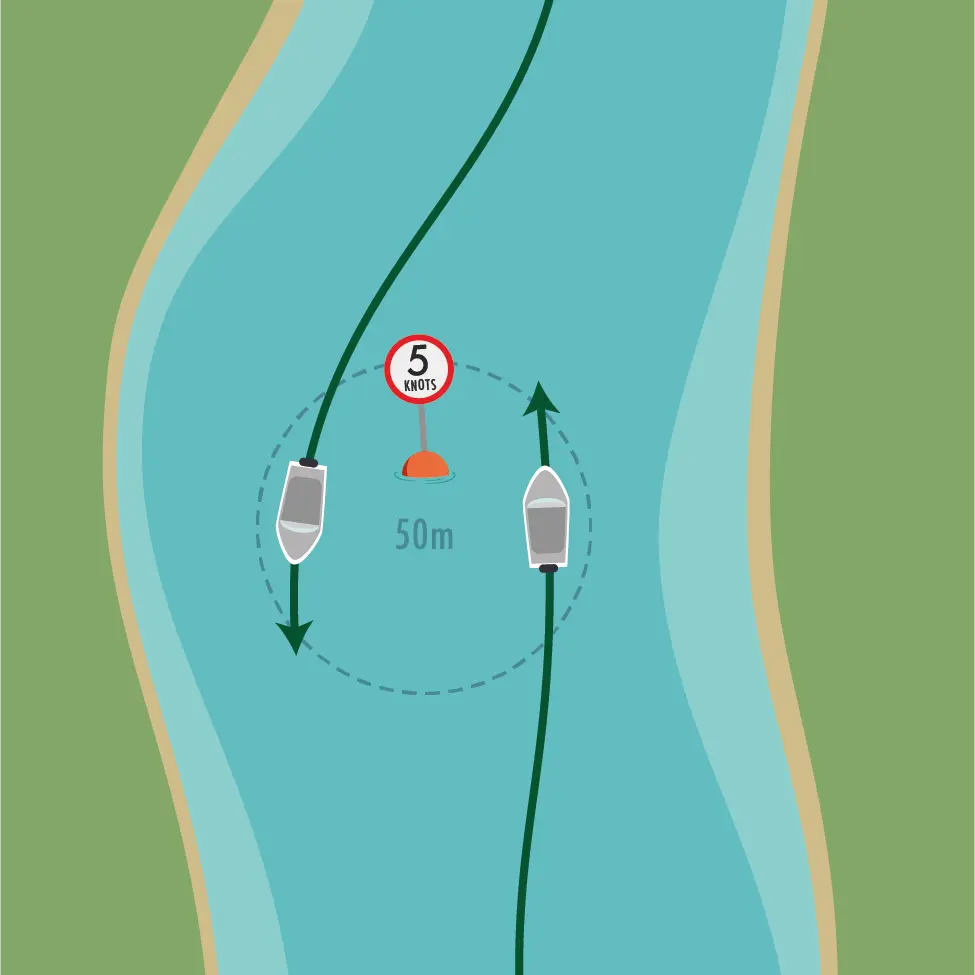
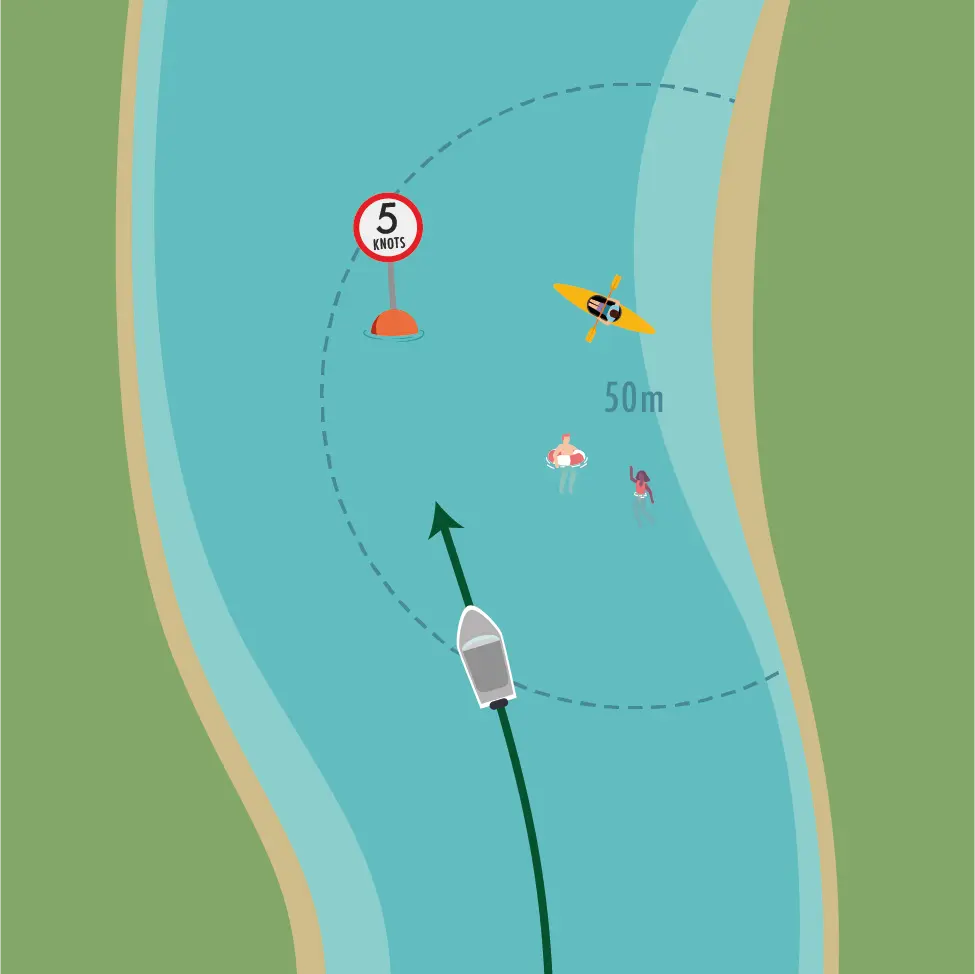
Always adjust your speed to suit conditions, visibility, and other river users. Under Maritime NZ regulations, all vessels must stay under 5 knots (9.3 kph) within 200m of shore or structures, and within 50m of other vessels or people in the water.
On the Whanganui Awa, powered craft are never more than 200m from shore. This means the 5-knots rule technically applies everywhere – but it is especially important between the City Bridge and Upokongaro, where river use is heaviest.
In practice, the most important rule for keeping people safe is reducing speed to 5 knots when within 50m of other vessels, paddlers, swimmers, or anyone in the water – and maintaining 50m distance wherever possible. To make this easy to remember, think of it as the Five Fifty rule (5 knots : 50 metres). When in doubt, slow down.
Give way and overtake safely
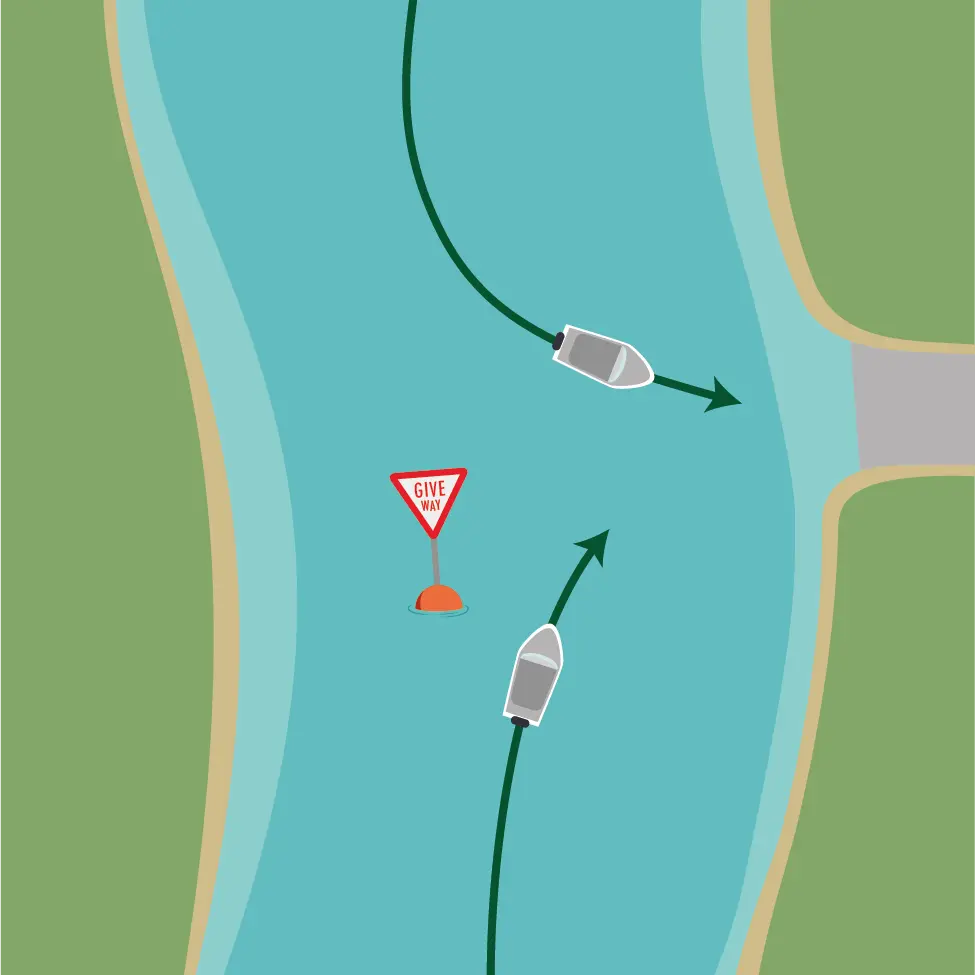
Vessels heading upstream must give way to those coming downstream.
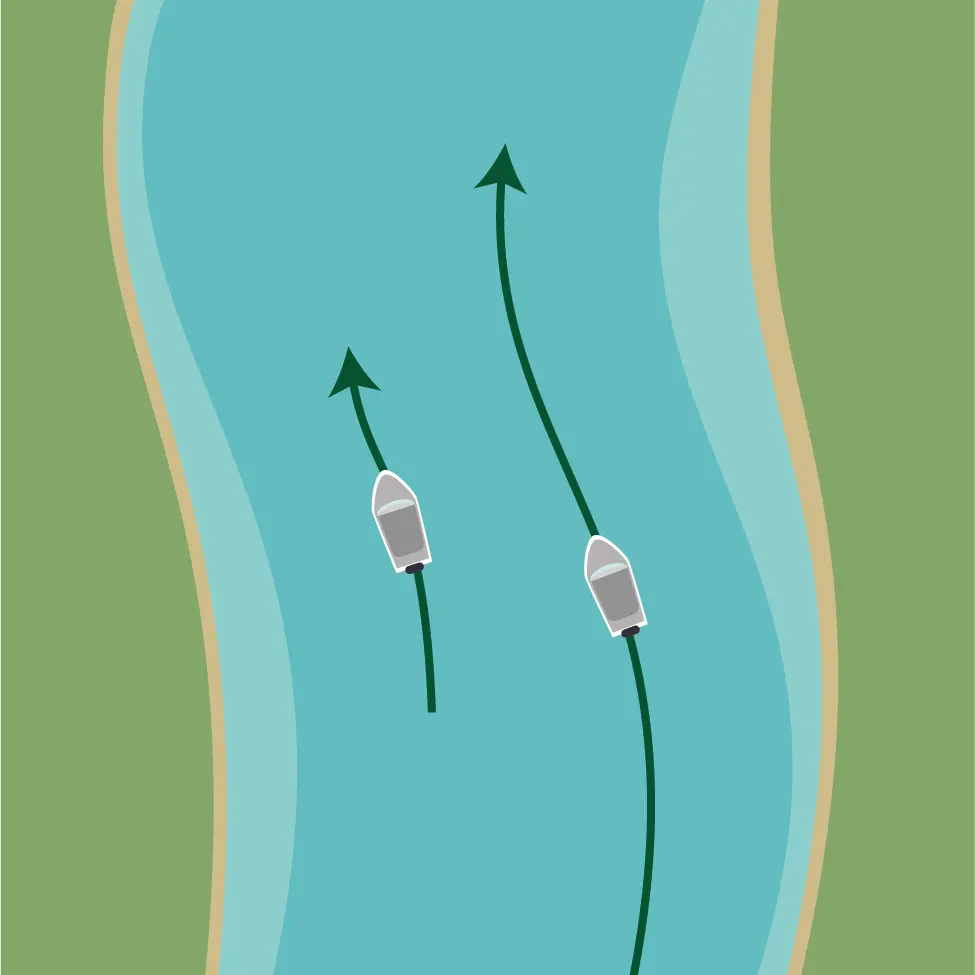
Always overtake a slower vessel on the starboard side. When overtaking, you must give way and allow plenty of space for the vessel you are passing. Also, if you are being overtaken, you must not intentionally impede the overtaking vessel.
Keep to the starboard side of the navigable channel
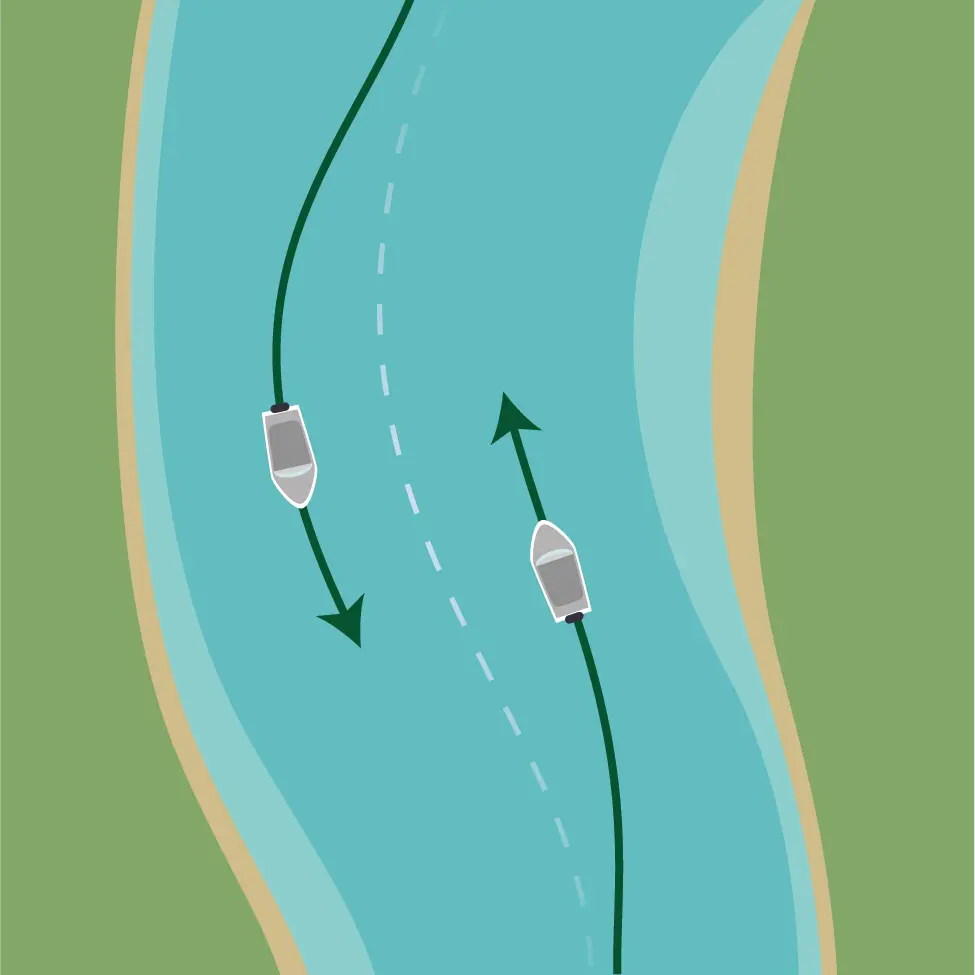

Vessels must keep to the right-hand (starboard) side of the navigable channel whenever it’s safe to do so. Note that in some areas the navigable channel may not sit on the starboard side of the river itself due to shallows or hazards. Always navigate with caution.
Be alert for shallow sections, particularly at low tide, where your vessel might get stuck. In particular, the river is often deeper at the outside of corners and shallower on the inside.
Powered craft must give way to human-powered craft
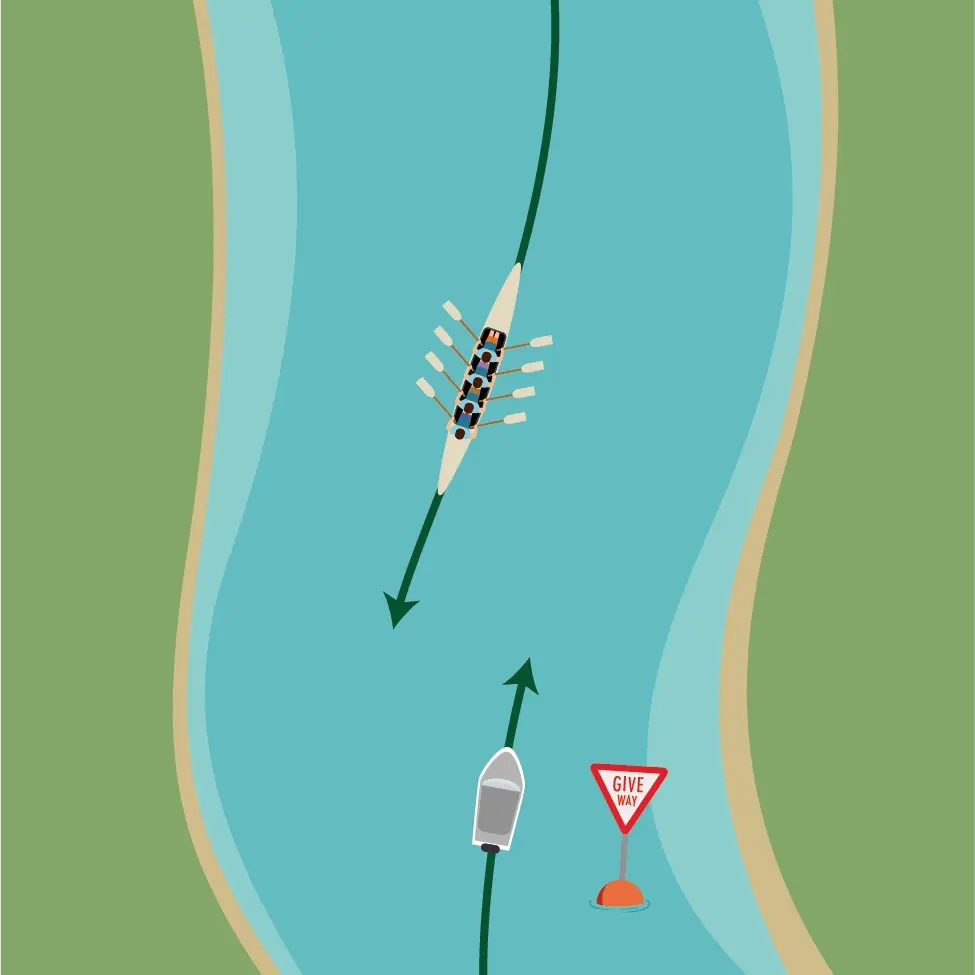
Powered vessels must give way to waka ama, rowing skiffs, kayaks, canoes, and stand-up paddleboards. These craft are more vulnerable, sit lower in the water, and can be harder to see. When approaching from behind, reduce speed and pass with a wide, slow, predictable path. Keep wash to a minimum. If visibility is poor or the channel is narrow, slow down and be prepared to stop.
Give riverboats plenty of space
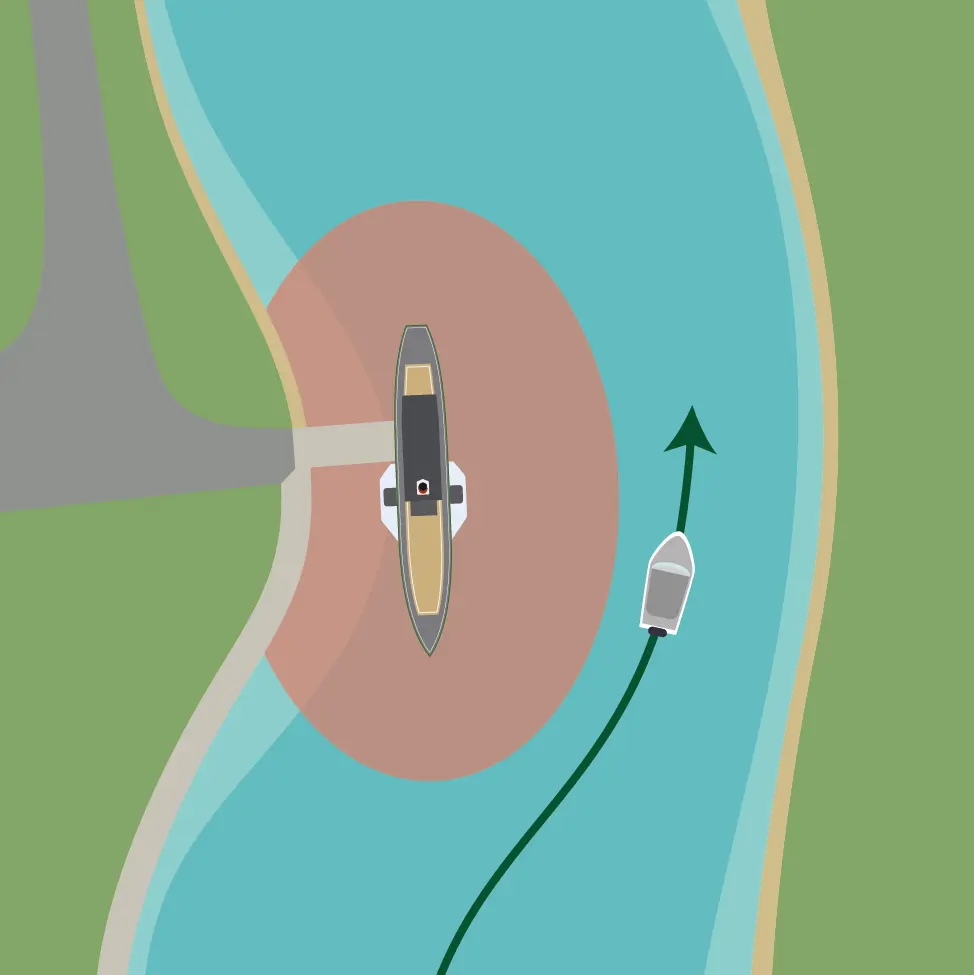
Large riverboats like the Waimarie and Wairua need all available space when turning or berthing near the city. Depending on tides, they may not fit under the City Bridge and have limited ability to manoeuvre around smaller craft, especially on an outgoing tide. Both vessels may tie up facing either upstream or downstream depending on conditions. Keep well clear when they’re turning or approaching the wharf.
General rules
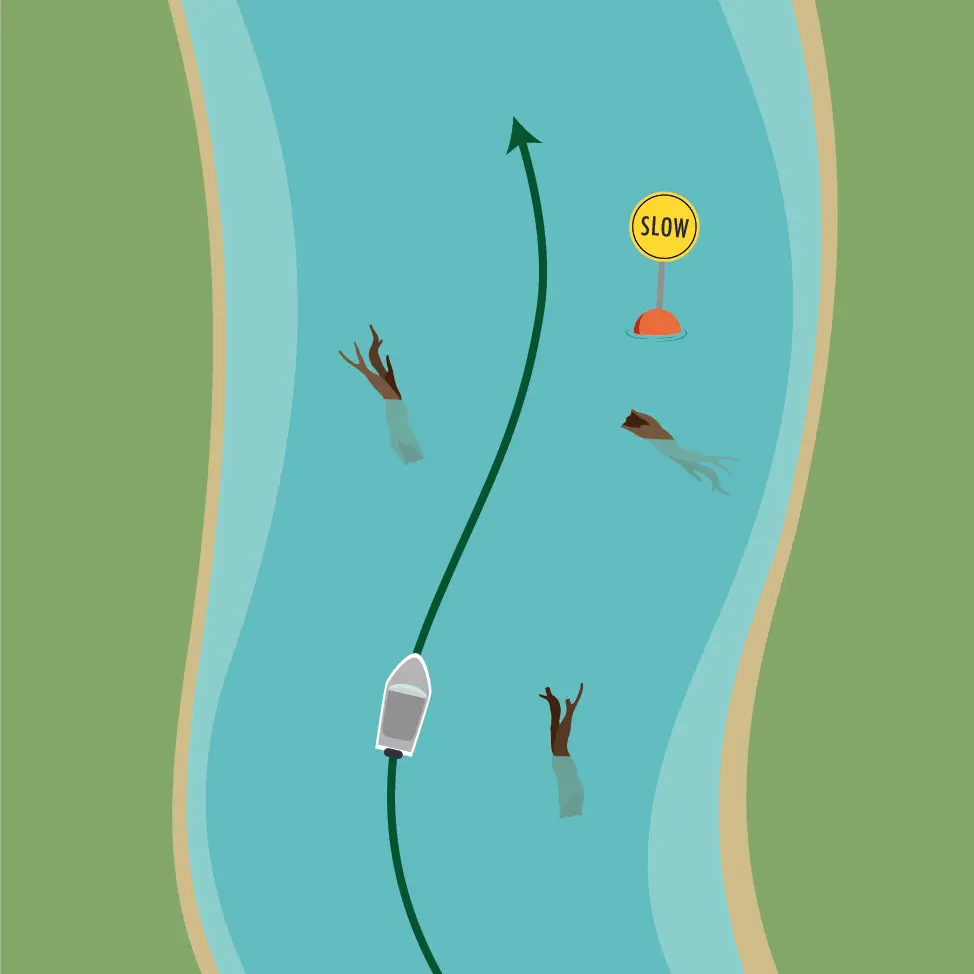
Keep a good lookout
Always watch for swimmers, paddlers, debris, mooring lines, and other river users or hazards, especially in narrow sections.
Wear a life jacket
A suitable life jacket must be carried for every person on board and be readily accessible. Anyone being towed (e.g. skis or tubes) must wear a properly fitted life jacket at all times.
Minimum age for powerboats
No person under 15 may operate a power-driven vessel capable of more than 10 knots unless supervised by someone 15 or older within immediate reach of the controls.
Mind your wake
Ensure your vessel’s wake does not cause danger, damage, or harm to other boats, structures, or people, whether they’re underway or moored.
Stay sober
Alcohol affects judgment and reaction time. Please wait until you’re safely back on dry land before having a drink.